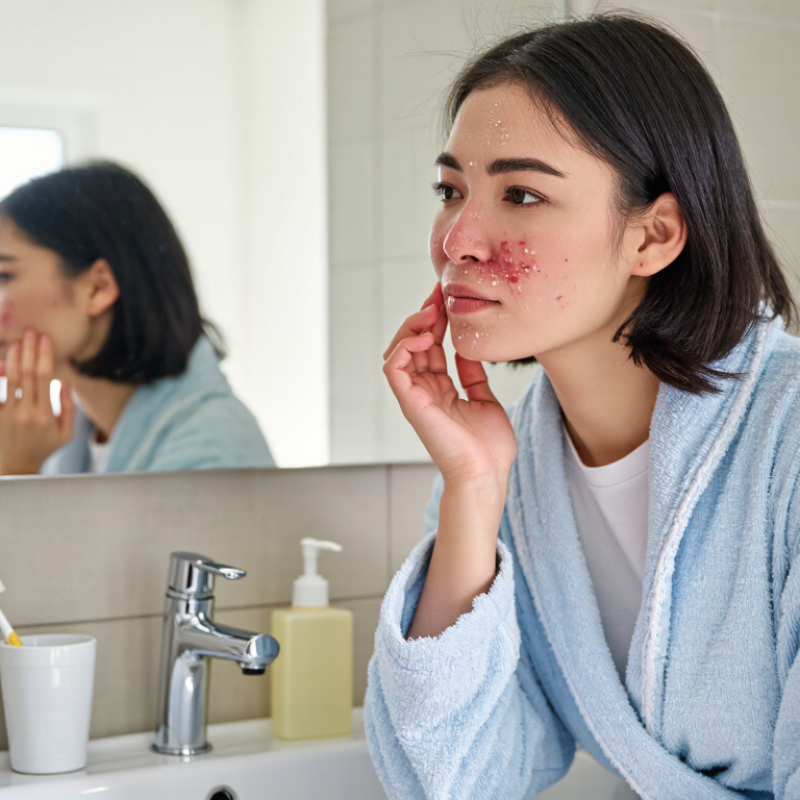
Retinol can support smoother-looking skin, but the first few weeks may bring dryness, tightness, redness, or visible flakes. If you have noticed peeling around your nose or mouth, you may be asking, “why is my skin peeling after retinol?” The answer is not always simple. Retinol can irritate the skin barrier, especially when used too often, applied in a large amount, or combined with other strong skincare ingredients. Dry weather, hot showers, and a routine that lacks moisturizer can add to the problem.
Peeling is not proof that a product is working better. Not a badge of progress. This guide explores ten common reasons retinol may leave skin flaky, from starting too quickly to using a formula that does not suit your skin. It also covers practical ways to adjust your routine, such as applying a pea-sized amount to dry skin, beginning with less frequent use, and choosing a gentle cleanser and moisturizer. These steps are general guidance, not a personal diagnosis; skin needs vary, and product labels matter.
Mild dryness may settle as your skin adjusts, but burning, swelling, painful cracks, or persistent irritation deserves attention. Pause retinol if your skin feels raw, and consider asking a dermatologist or qualified healthcare professional what to do next. It can be frustrating to slow down when you hoped for quick results. Still, a calmer routine is often a wiser place to start.
Retinol is a vitamin A derivative that changes how skin cells mature and shed. In the skin, it is converted into retinoic acid, which influences cell activity and supports collagen production. This can gradually soften fine lines and uneven texture. It is not an overnight reset. A 2007 controlled study in Archives of Dermatology tested 0.4% retinol on aged skin and reported improvement in fine wrinkles (Kafi et al., 2007). The study does not mean peeling is required for results.
Flaking usually signals irritation or dryness, especially when retinol is introduced too often or combined with other irritating products. The skin may feel tight, look pink, or shed in tiny patches around the nose and mouth. A little roughness is not a scorecard. The American Academy of Dermatology advises starting with a lower-strength retinoid and using it less often at first, increasing gradually as tolerated. Apply a small amount to dry skin, moisturize, and pause if burning or persistent redness develops. I used to think more peeling meant faster progress; that assumption is easy to make, but it is not a reliable guide. If symptoms are severe or do not settle, ask a dermatologist before restarting.
Retinol can support skin cell turnover, but it may also cause temporary dryness, redness, or peeling as the skin adjusts. This cautious schedule is an example, not a clinical rule: increase use only if your skin tolerates it. Moisturize, use daytime sunscreen, and reduce or pause use if irritation persists. Seek medical advice for severe irritation.
Why Retinol Can Cause Peeling
Retinol can speed changes in how skin cells mature and shed. During the adjustment period, the outer layer may feel dry, tight, or flaky. Often, it shows around the nose and mouth first. Too much product, frequent use, or applying it to damp skin can make irritation more noticeable. Peeling is not proof that retinol is working better. It can mean your skin barrier needs a gentler routine.
Clinical evidence offers useful context, but not a precise rate for every retinol product. FDA prescribing information for topical tretinoin lists dryness, redness, and peeling among reported local reactions; tretinoin is stronger and is not interchangeable with cosmetic retinol. The American Academy of Dermatology advises easing into retinoid use to limit irritation. Try a small amount less often, and use a plain moisturizer. A cool, flaky patch may settle. If peeling becomes painful, swollen, or persistently raw, stop using the product and ask a dermatologist. It is easy to blame the formula alone; cleanser, weather, and other active ingredients may also be contributing.
| No. | Factor | Why peeling may happen | What you may notice | Practical response |
|---|---|---|---|---|
| 1 | Retinoid irritation | Retinoids can temporarily disrupt the skin barrier and affect how surface skin cells mature, causing dryness and flaking. | Fine flakes, tightness, or mild redness after starting or increasing use. | Pause or reduce use until comfortable; use a gentle cleanser and moisturizer. |
| 2 | Starting too frequently | Using retinol nightly from the outset may give the skin too little time to adjust. | Dryness or stinging that builds over several applications. | When irritation has settled, consider restarting less often and follow the product directions. |
| 3 | High strength or excessive amount | A stronger formula or applying more than directed can increase irritation without making results arrive faster. | Pronounced peeling, burning, or persistent redness. | Stop until skin recovers; use only the directed amount if you restart. |
| 4 | Applying to damp skin | Recently washed, damp skin may increase penetration and make irritation more likely for some people. | Stinging soon after application, followed by dryness or flaking. | Apply to dry skin and avoid the eyes, corners of the nose, and lips. |
| 5 | Combining irritating products | Exfoliating acids, scrubs, or other irritating treatments used in the same routine can add to irritation. | More burning, redness, or scaling after adding another active product. | Simplify the routine while irritated; reintroduce products cautiously rather than layering them. |
| 6 | Dry or sensitive skin | Skin with an already vulnerable barrier may tolerate retinoids less comfortably. | Flaking or tightness appears quickly, sometimes with mild sensitivity to other products. | Prioritize gentle cleansing and moisturizing; seek individualized advice if sensitivity persists. |
| 7 | Cold, dry, or windy weather | Low humidity and environmental exposure can increase moisture loss and compound retinoid-related dryness. | More noticeable dryness on exposed areas during colder or drier conditions. | Use a bland moisturizer and adjust retinoid use if irritation develops. |
| 8 | Applying over irritated or broken skin | Cuts, sunburn, eczema, or an active rash can make the skin more reactive to retinoids. | Strong stinging or worsening redness in already inflamed areas. | Do not apply to sunburned, broken, or actively irritated skin; get medical advice for ongoing inflammation. |
| 9 | Using it near delicate areas | The skin around the eyes, nostrils, and mouth is prone to irritation, and product can migrate from nearby areas. | Localized flaking, dryness, or soreness around these areas. | Keep application away from these areas and discontinue use there if irritation occurs. |
| 10 | Contact allergy or another skin condition | A rash may be caused by an allergy to an ingredient or by a skin condition rather than routine retinoid adjustment. | Intense itching, swelling, blistering, spreading rash, or symptoms that do not improve after stopping. | Stop using the product and consult a healthcare professional; seek prompt care for severe symptoms. |
Note: Mild dryness and fine flaking can occur with topical retinoids, but peeling is not required for the product to work. Severe pain, swelling, blistering, or persistent irritation warrants medical advice.
How to Tell Normal Peeling from Irritation
Retinol can cause mild dryness and fine flaking, especially during the first few weeks or after increasing how often you use it. Normal peeling is usually limited to small patches around the nose, mouth, or chin. Your skin may feel a little tight, but it should not hurt. A few flakes, nothing more.
Irritation is different. Look for persistent burning, bright redness, swelling, tenderness, or cracks that sting when water touches them. The reaction may spread beyond the areas where you applied retinol. If your face feels hot or painful, do not assume the product is “working.” That idea can be misleading.
Pause retinol if irritation develops, and use a gentle cleanser and plain moisturizer while your skin settles. Skip scrubs and other exfoliating products for now. When your skin feels normal again, consider restarting less often and using a small amount on completely dry skin. Improvement is not always a straight line; even a careful routine can still irritate sensitive skin. Contact a healthcare professional if symptoms are severe, keep worsening, or do not improve after stopping.
China Top 10 Why Is My Skin Peeling After Retinol?
Factors That Can Make Peeling Worse
Retinol can speed skin-cell turnover, and mild dryness or flaking may happen as skin adjusts. Peeling can worsen when you use a strong formula or apply it too often. More is not better. Putting it on damp skin may also increase irritation, since moisture can help the ingredient penetrate. If your skin feels tight or stings, that is useful feedback, not a sign to push through.
Other products and habits can add to the irritation. Combining retinol with exfoliating acids, rough scrubs, or drying cleansers may leave the skin barrier more vulnerable. Hot showers and cold, dry weather can make flaky patches feel worse. Sun exposure may aggravate irritated skin, too. It is easy to blame retinol alone, but the whole routine matters.
Tips: Pause retinol until your skin feels comfortable, then consider restarting less often. Use a gentle cleanser, apply a plain moisturizer, and wear broad-spectrum sunscreen during the day. Avoid picking flakes; it can leave raw, sore spots. If peeling is painful, swollen, blistered, or persistent, stop using the product and ask a healthcare professional for advice.
Peeling after retinol usually means your skin barrier is irritated, not that the product is “working harder.” Redness, tightness, and fine flakes often appear when use begins or increases. The American Academy of Dermatology recommends starting with application every other night, then increasing gradually as skin tolerates it. Less can be more. If peeling starts, pause until the skin feels comfortable; avoid scrubs, exfoliating acids, and hot water meanwhile. A 2021 review in Dermatology and Therapy describes dryness, scaling, and burning as common effects of topical retinoids, especially with frequent use. Retinol is not identical to prescription retinoids, so those findings are useful context, not a personal diagnosis.
Restart with a pea-sized amount on completely dry skin, two nights a week. Add a plain moisturizer before or after it; this can reduce discomfort without making the routine complicated. Keep it away from eyelids, nostril creases, and cracked areas. Use broad-spectrum SPF 30 or higher each morning, as AAD guidance recommends, and reapply outdoors. A little flaking may still happen. That is not a reason to push through soreness. If burning, swelling, painful cracks, or persistent redness develops, stop and seek advice from a dermatologist. I would also check the product’s concentration and your other active ingredients; sometimes the routine, not retinol alone, is the problem.
Retinol is a vitamin A derivative that affects how skin cells mature and shed. It can support collagen production and gradually soften fine lines or uneven texture. Not an overnight reset.
No. Flaking often signals dryness or irritation, not better results. A few flakes, perhaps. I used to think peeling meant progress; that was an easy, shaky assumption.
Fine flakes may appear around the nose, mouth, or chin, especially during the first few weeks. Skin may feel slightly tight, but it should not hurt.
Watch for persistent burning, bright redness, swelling, tenderness, or painful cracks. Water may sting. Symptoms can spread beyond the areas where retinol was applied.
Pause retinol and use a gentle cleanser and plain moisturizer while your skin settles. Avoid scrubs, exfoliating products, and hot water. Seek professional advice if symptoms worsen or persist.
Wait until your skin feels comfortable. Then try a pea-sized amount on completely dry skin, two nights a week. Increase use gradually only if your skin tolerates it.
Keep it away from your eyelids, nostril creases, and cracked skin. Moisturizer before or after application may help reduce discomfort.
Use broad-spectrum SPF 30 or higher each morning, and reapply when outdoors. A little flaking may still happen. That is not a reason to push through soreness.
Retinol encourages skin-cell turnover and supports smoother, clearer-looking skin, but this adjustment can sometimes lead to dryness and flaking. If you’re wondering, “why is my skin peeling after retinol,” the cause may be that retinol is speeding up the shedding of surface cells or temporarily weakening the skin’s moisture barrier. Mild, short-lived flaking can occur as your skin adapts, while persistent burning, significant redness, swelling, or painful cracks may signal irritation rather than normal adjustment.
Peeling may become worse if you use retinol too often, apply too much, combine it with other strong exfoliating products, or start with already dry or sensitive skin. To reduce discomfort, introduce retinol gradually, use a small amount on dry skin, and follow with a gentle moisturizer. Avoid applying it to irritated areas, and keep your routine simple while your skin adjusts. Daily sunscreen can also help protect skin that feels more sensitive. If symptoms are severe or do not improve after pausing use, seek advice from a qualified healthcare professional.
